Colorado has 128 overdue Title V permits.
EPA enforcement is back.
Companies are losing months, and sometimes hundreds of millions of dollars, waiting on a federal air operating permit they cannot move. This guide explains why the backlog is growing in 2026, what the law actually requires, and where the agency-side review loop can be shortened.
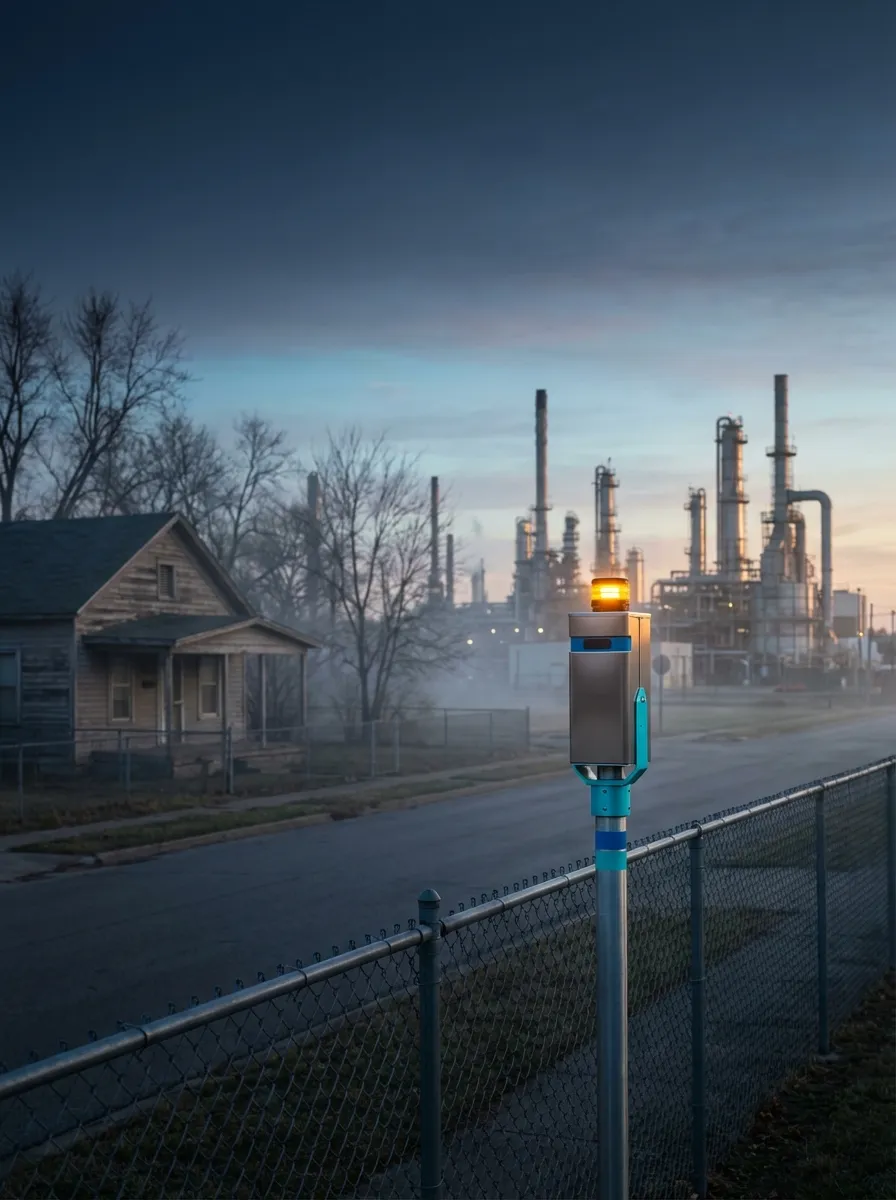
The 2026 reality
Three things every facility executive should know before the next renewal cycle.
Colorado, 2022 to 2026
The queue grew, even with more staff
Colorado's air pollution permit backlog went from 111 in 2022 to 128 in 2026, despite tens of millions of dollars in additional state staffing. The state finished 73 major Title V permits in 2025, up from 13 in 2022, but the queue is still growing faster than the throughput. You cannot hire your way out of an iteration problem.
Expired is not safe
Operating expired is not a free pass
In some regions, roughly 90 percent of Title V permits are operating under expired conditions because the agency has not reached the renewal. EPA has resumed enforcement, including citizen-suit referrals, and air quality classification downgrades have pulled more than 100 additional entities into major-source applicability.
The applicant pays the delay
Cost of delay sits with the operator
The Chevron Richmond Refinery experience is a recognizable example of how expensive a contested permit and operations cycle can become for a single facility. Whatever the project, every quarter spent in agency review is a quarter of capital, contractor mobilization, and lost output the applicant absorbs, not the regulator.
Where LSARS fits
Shorten the iteration loop, not the law.
LSARS does not change what the Clean Air Act requires. It gives the applicant and the agency reviewer the same regulatory-aligned view of emissions, dispersion, and health risk, so the back and forth stops costing months.
Pre-submittal health risk screen
Run an OEHHA-aligned health risk assessment before the application goes in. Health-impact questions surface in your team's workspace, not at agency public-comment week, when they cost the most calendar to resolve.
Permit zone-of-impact analysis
Dispersion overlay tied to the facility footprint and the surrounding receptors. The applicant and the reviewer see the same hotspot map, the same dispersion assumptions, and the same fenceline impact estimate.
Audit-trailed calculations
Every number traces back to a source dataset, a methodology document, and the input assumptions. The agency reviewer can reproduce the result on the first pass instead of asking for another revision round.
Shared cloud workspace
One workspace the applicant, the consultant, and the agency reviewer can open at the same time. No more emailing PDFs back and forth, no more reconciling which dispersion file is the current one.
Where LSARS speeds the cycle
Built for facilities that cannot wait three years for a renewal.
Title V cycles slip in a small number of predictable places. LSARS is designed to make those slip points visible early, so the applicant and the agency are looking at the same data on day one.
Where Title V cycles slip
Five common stall points.
Source list missing fugitive units, startup or shutdown events, or recent equipment changes.
Applicant and agency cannot agree on which control technology is achievable for the source category.
Dispersion modeling assumptions and meteorological data inputs are contested late in review.
Each comment round adds weeks of internal agency response time before the next iteration.
Community concerns about cancer risk and hazard index force a pre-submittal HRA the application did not include.
What 2026 looks different
EPA enforcement is back.
EPA downgrades of air quality area classifications have pulled over 100 additional entities into major-source applicability. Citizen-suit activity and federal oversight referrals have increased. Operating under an expired Title V permit is not the quiet position it was a few years ago.
Honest about scope
Not every facility needs LSARS. Here is how to tell.
For some facilities, a long-time consultant and an extra few months in the queue is the right answer. For others, the cost of delay is large enough that closing the iteration loop pays for itself in a single permit. Here is the line.
Stay with traditional consulting
When the established firm is the right call
Firms like ALL4, RTP Environmental, and Trinity Consultants are legitimate, experienced Title V partners. For a lot of facilities, that is the right answer.
- A single small Title V renewal with no community opposition
- A consultant who has known the facility for years and knows the agency
- A facility where an extra few months in the queue is acceptable
- A minor source that does not need a Title V permit at all
- A site with no fenceline or sensitive-receptor exposure concerns
For minor sources under the Part 70 thresholds, you do not need a Title V permit and you do not need LSARS. You need a state minor-source permit.
Use LSARS
When the cost of delay is the constraint
Use LSARS as the underlying engine. Your consultant or in-house team still owns the application.
- Facilities in states with the worst backlogs (Colorado and similar)
- Sites under renewed EPA enforcement scrutiny in 2026
- Multi-site operators with portfolios of permits in flight
- Facilities near sensitive receptors where HRA-driven scrutiny is likely
- Renewals that fall during the 2026 enforcement uptick
- Projects where every month of delay is large capital sitting idle
LSARS does not write or file your permit. Your team or your consultant does. LSARS shortens the iteration loop.
The traditional consulting firms are legitimate partners, not competitors. They can use LSARS as the calculation engine underneath their existing Title V workflow. When the permitting process is fair and objective, we all win.
Title V FAQ
Common questions about Title V backlogs, expired permits, and the 2026 enforcement environment.
How long does a Title V permit take to get approved?
The Clean Air Act sets an 18-month statutory clock for a permitting authority to act on a complete Title V application, but actual times vary widely by state and by source complexity. In states with the worst backlogs, initial issuance and renewal cycles regularly run two to four years, and in some regions roughly 90 percent of Title V permits are operating under expired conditions because the agency has not gotten to the renewal yet. The single biggest driver of timeline is not the agency calendar; it is how many review cycles the application goes through after submittal. Pre-submittal completeness work and audit-trailed calculations are where most of the time is recovered.
What is the difference between Title V and NSR?
Title V is the federal Clean Air Act operating permit program for major sources of air pollution, codified at 42 U.S.C. sections 7661 to 7661f and implemented through 40 CFR Parts 70 and 71. It does not by itself impose new emission limits. It consolidates all applicable Clean Air Act requirements for a facility into one enforceable operating permit. New Source Review (NSR), by contrast, is the preconstruction permit program. NSR applies before you build or modify a major source and sets the limits (PSD or nonattainment NSR). In practice, NSR sets the obligations and Title V is the document the facility has to operate under once construction is done.
What is a non-title V air permit?
A non-Title V air permit is a state-issued air permit for a source that falls below the major-source thresholds in 40 CFR Part 70. These are typically called minor-source permits, synthetic minor permits, or state operating permits, depending on the jurisdiction. They are issued under state authority rather than the federal Title V program, they are usually much faster to obtain, and they do not require the same public participation and EPA review steps. If your facility is genuinely a minor source, a non-Title V state permit is the right path and you do not need a Title V program at all.
What happens if my Title V permit expires before the agency renews it?
Under 40 CFR Part 70, if you submit a timely and complete renewal application, your existing Title V permit terms remain in effect through an application shield until the agency acts on the renewal. That means you can keep operating, but it does not mean enforcement risk goes to zero. EPA has been increasing oversight on lapsed and expired permit conditions, and citizen suits under the Clean Air Act can still proceed. The application shield protects the operator from a lapse caused by agency delay, not from underlying compliance issues.
Why are state Title V programs backlogged in 2026?
Three things compound. First, the queue is growing faster than agencies can hire their way out of it. Colorado, for example, went from 111 overdue permits in 2022 to 128 in 2026 despite tens of millions of dollars in additional staffing. Second, EPA has resumed downgrades of air quality area classifications, which has pulled over 100 additional sources into major-source applicability. Third, every public-comment round, every agency request for additional information, and every revised dispersion run resets weeks of internal review. The bottleneck is not headcount alone; it is the iteration count per application.
What is a Title V permit shield?
The Title V permit shield is the provision in 40 CFR 70.6(f) that says compliance with the Title V permit is deemed compliance with the applicable Clean Air Act requirements that are specifically identified in the permit. It is one of the main reasons facilities want a clean, well-written Title V permit on file. A correctly drafted shield reduces ambiguity for the operator, the agency, and the community about what is and is not enforceable. It does not cover requirements that were left out of the permit, which is one reason the application phase matters so much.
How can a facility shorten its Title V timeline?
The fastest gains are upstream of the agency, not inside it. Start with a complete and reproducible emissions inventory tied to the actual operating data, run a pre-submittal health risk screen so health-impact questions surface before the agency reviewer raises them, and use a shared workspace where the agency can see the same inputs the applicant sees instead of trading PDFs. The Chevron Richmond Refinery experience is a recognizable example of how expensive a slow, contested permit cycle can become. The goal is to give the reviewer something they can reproduce on the first pass.
Does LSARS write or file my Title V permit application?
No. LSARS does not write your permit and does not file it. Your team or your environmental consulting firm does that work, and the responsible facility is always the entity of record. LSARS shortens the iteration loop by giving the applicant and the agency reviewer the same view of emissions, dispersion, and health risk math, with an audit trail for every number. Traditional firms (ALL4, RTP Environmental, Trinity, Eastern Research Group) are legitimate partners, not competitors. They can use LSARS as the underlying calculation engine.
Related guides
More from the LSARS guide library
Data center air permit guide
National guide hooked on the Virginia HB 507 Tier IV mandate effective July 1, 2026.
AB2588 software
Air Toxics Hot Spots HRA workflow for California facility filings.
EPA AirToxScreen explainer
What AirToxScreen is, what it is not, and how to use it for production permitting work.
See your next Title V cycle in LSARS.
Bring a real facility. We will walk through the emissions inventory, the dispersion overlay, and the health risk math the agency reviewer is going to ask about. Walkthroughs run about 30 minutes.