660 data centers in Virginia.
21 NSR permits pending. Tier IV mandate hits July 1, 2026.
A buyer guide for data center developers, hyperscaler real estate teams, and their environmental consultants. Air permits are the slow link in data center timelines, and the rules are tightening fast. Here is what to know before you file.
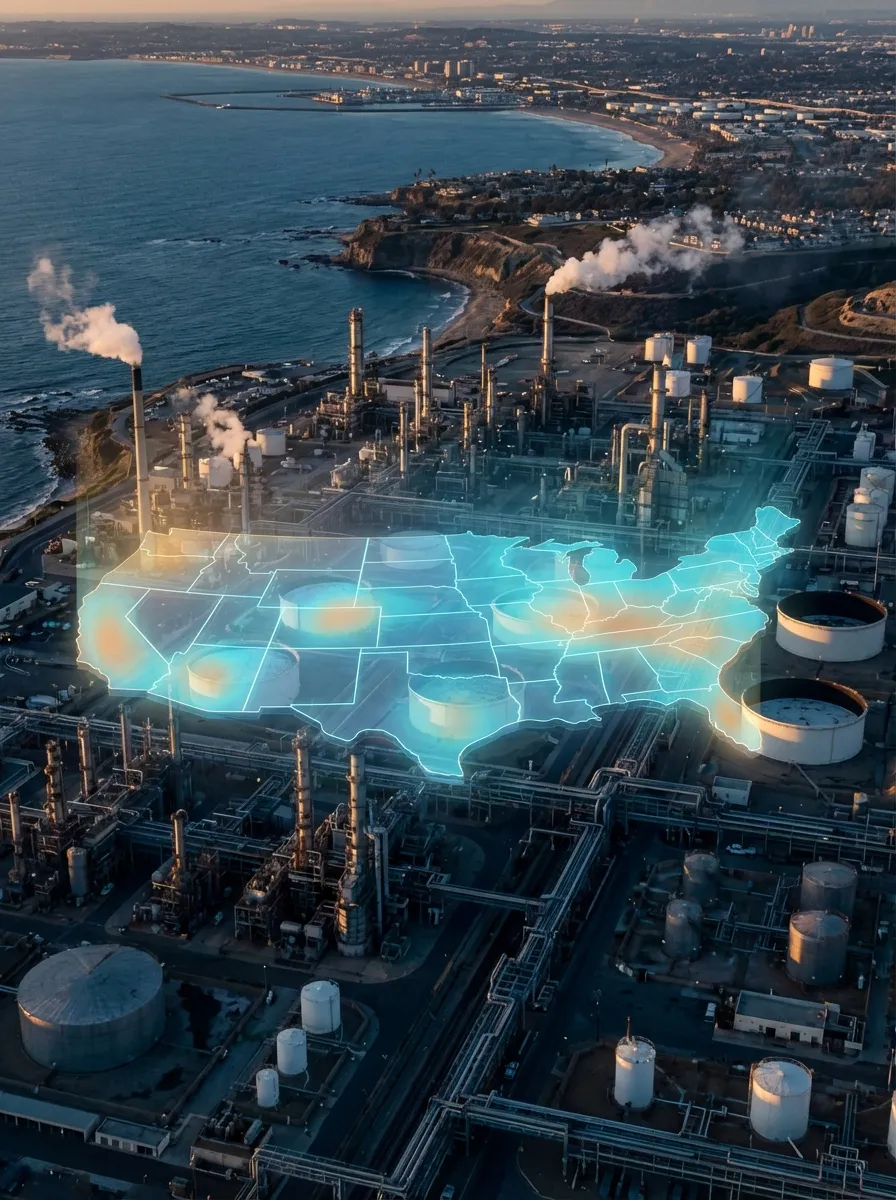
The data center permit reality
Three things data center developers are running into right now.
July 1, 2026
The Tier IV clock is ticking
Virginia House Bill 507 directs Virginia DEQ to deny any air permit submitted for a data center generator on or after July 1, 2026 unless the generators are equipped with Tier IV emission controls or the environmental equivalent. Updated BACT guidance for emergency and non-emergency diesel generator sets at data centers takes effect on the same date.
The slow link
Air permits gate the schedule
On data center builds, the air permit is usually the long pole. It runs longer than water, longer than zoning, and longer than utility interconnection in many cases. Virginia DEQ currently lists 184 existing NSR permits and 21 active applications associated with data centers, and review cycles are tightening as scrutiny grows.
Pre-submittal vs post-submittal
Fix it before you file
Once an application is in front of an agency, every fix is expensive. The Northern Regional Office of Virginia DEQ has added requirements and new boilerplate language that can delay permits when applicants do not account for them at the start of a project. The work that matters happens before the application leaves your office.
What LSARS provides
Built for data center applicants who need to move before July 1.
LSARS gives data center teams the pre-submittal calculation layer that stops permits from stalling. Run scenarios, find the receptor problem before the agency does, and walk into the air district with a defensible package.
Permit zone of impact analysis
MEIR, MEIW, PMI, and Hazard Index for the proposed generator fleet in seconds, not weeks. See where the impact lands and which receptors drive the result before the application goes out the door.
BACT and Tier IV scenario modeling
Compare control configurations, generator counts, and permitted hours side by side before BACT decisions are locked in. Bring the right answer to the agency, not three rounds of revisions.
Health risk assessment for nearby receptors
Pre-submittal HRA against schools, residences, and hospitals near the site. Both EPA AirToxScreen and CA-OEHHA 2015 methodologies. Validated against the official CARB HARP2 software to five significant figures.
Shared cloud view for agency review
Reviewing engineers at the air district can verify your numbers against the same data and the same engine. Less back and forth, fewer surprises, a reproducible record that survives public comment.
Why LSARS
Speed to submittal, with a record that holds up under review.
Data center developers are building portfolios, not one-off sites. LSARS is the layer that lets a portfolio team move faster on every site without giving up rigor on any of them.
Virginia by the numbers
Where the heat is right now.
As of November 24, 2025, per Virginia DEQ reporting
Data center associated New Source Review permits on file with Virginia DEQ
Currently pending data center NSR applications under Virginia DEQ review
Virginia House Bill 507 deadline for Tier IV controls on data center generators
What slips data center permits
The four most common late-stage problems.
- 1. BACT determinations that do not match current Tier IV expectations
- 2. Receptor-driven impacts surfaced for the first time during public comment
- 3. Boilerplate and application content the regional office now requires up front
- 4. Potential to emit calculations that push the site into Title V unintentionally
Honest about scope
There are two kinds of data center permit work. Use the right tool for each.
LSARS is not a replacement for traditional environmental engineering consulting on every project. For a single small site, the time-tested route is still the right route. For a portfolio, the math is different.
Use traditional consulting
When it is the right call
Trinity Consultants, ALL4, RTP Environmental, and similar long-established firms are legitimate partners for the work below.
- A single small data center with limited generator capacity
- A turnkey filing where the owner wants the consultant on the hook for everything
- Projects where no recurring portfolio view is needed
- Sites with no nearby sensitive receptors or known EJ exposure
- Owners who already have a long working relationship with a regional engineering firm
Not built for multi-site portfolio modeling, scenario comparison, or shared agency workflows.
Use LSARS
When portfolio math takes over
For developers running multi-site data center portfolios across several states.
- Portfolios spanning multiple states and multiple air districts
- Scenario modeling before BACT and Tier IV decisions are locked in
- Pre-submittal HRA for sensitive receptors near each site
- Shared cloud view that reviewing agencies can verify against
- Continuous monitoring across the full project lifecycle, not a one-time report
- A reproducible record that holds up when public comment surfaces concerns
LSARS does not replace dispersion modeling tools like AERMOD or BREEZE. It consumes their output and runs the HRA and zone-of-impact analysis on top.
The honest answer: traditional consulting and LSARS are not the same product. One is a project-by-project filing service. The other is a portfolio platform. Pick the one that matches the work in front of you.
Data center air permit FAQ
Common questions about NSR, Title V, BACT, and Tier IV for data centers.
What is the difference between Title V and NSR?
New Source Review (NSR) is a preconstruction permit. It governs whether a new or modified source of air pollution can be built and what control technology it must use. Title V is an operating permit. It rolls up all of a major source's applicable Clean Air Act requirements into a single document the facility operates under after construction. A new data center typically goes through NSR first to authorize the diesel generators and any other emission units. If the resulting potential to emit crosses Title V thresholds, the facility then needs a Title V operating permit to run.
What is a non-title V air permit?
A non-Title V air permit is a state-issued operating or construction permit for a source whose potential to emit falls below federal Title V major source thresholds. Many data centers, depending on generator count, generator size, and projected operating hours, are permitted as synthetic minor or true minor sources under state programs rather than as Title V majors. The choice has real consequences for monitoring, recordkeeping, and renewal cadence, and it should be modeled before generator counts are locked in, not after.
Why do data centers need air permits?
Data centers run banks of large diesel generators for backup power. Diesel combustion produces nitrogen oxides, particulate matter, carbon monoxide, sulfur dioxide, and air toxics, all regulated under the Clean Air Act. Even if the generators only run during outages and routine readiness testing, their potential to emit is calculated against permitted hours, not actual hours, which is enough to trigger NSR review and, in many cases, Title V operating permit obligations. Air permits are usually the slowest part of a data center build, slower than water or land use approvals.
What is an NSR permit for a data center?
New Source Review is the federal Clean Air Act preconstruction permitting program. For a data center, the NSR permit authorizes the construction of the diesel generator fleet and sets the emission limits, control requirements, monitoring conditions, and operating restrictions the facility must follow. Virginia DEQ currently lists 184 existing NSR permits and 21 active NSR applications associated with data centers. NSR is also where Best Available Control Technology determinations are made, which is the lever that the new Tier IV mandate pulls on directly.
What are Tier IV generators and why do they matter for data centers?
Tier IV refers to the EPA non-road diesel engine emission standards, which are the most restrictive tier currently in force for new diesel engines. Tier IV-equivalent controls dramatically reduce nitrogen oxide and particulate matter emissions compared to older tiers, typically through selective catalytic reduction and diesel particulate filters. Virginia House Bill 507 directs Virginia DEQ to deny any air permit submitted for a data center generator on or after July 1, 2026 unless the generators are equipped with Tier IV emission controls or the environmental equivalent. Updated BACT guidance for both emergency and non-emergency diesel generator sets at data centers also takes effect for applications received on or after that date.
How long does a data center air permit take?
Timelines vary by state, by region within a state, and by how clean the application is on submission. Air permit applications are commonly the slow link in a data center schedule. The Northern Regional Office of Virginia DEQ has added requirements and new boilerplate language to the air permit application process that can extend review cycles when applicants do not account for them at the start of a project. The work that compresses the schedule happens before filing, not after, which is why pre-submittal scenario modeling and zone-of-impact analysis matter so much.
Do data centers need Title V permits?
It depends on potential to emit. If the data center's permitted generator capacity, federally enforceable hour limits, and any other emission units sum to a potential to emit at or above the major source thresholds (typically 100 tons per year of any criteria pollutant in attainment areas, lower in nonattainment areas), it is a Title V major source and needs a Title V operating permit. Many large hyperscale campuses end up as Title V majors. Many smaller or capacity-restricted sites are permitted as synthetic minors under state programs to avoid Title V. The choice should be modeled, not assumed.
How does community opposition affect data center permitting timelines?
Community concerns about air quality, noise, water use, and cumulative impact have become a routine part of data center permitting in Virginia, Georgia, Texas, and several other markets. Public comment periods on draft NSR permits can extend timelines and can force additional dispersion modeling or health risk analysis if commenters raise specific receptor or environmental justice concerns. The defensible response is the same calculation the air district would run: a transparent zone of impact, an honest health risk assessment for nearby sensitive receptors, and a record that any reviewer can reproduce. That is the workflow LSARS is built for.
Related guides
More from the LSARS guide library
Title V permit backlog
Why Title V cycles are slipping in 2026 and what applicants can do about it.
CEQA health risk assessment
OEHHA 2015 methodology for California EIR work, construction and operational phases.
EPA AirToxScreen explainer
What AirToxScreen is, what it is not, and how to use it for production permitting work.
See your site in LSARS before July 1.
Bring a real or proposed data center site. We will run the zone of impact, the receptor analysis, and the BACT and Tier IV scenarios in front of you. Walkthroughs run about 30 minutes.