What happens when a billion-dollar expansion gets stuck waiting on one thing: an air permit that takes years to be approved? That kind of delay can quietly become a financial and legal risk.
Back to Insights
Human-AI
When Silence Becomes Risk: What Every Executive Should Know About Air Permit Delays
December 22, 2025
Nelson Smith
Vol. 1 Issue 8 (January 2026)
By Nelson Smith and Julian Smith
The Hidden Risk Behind Every Expansion
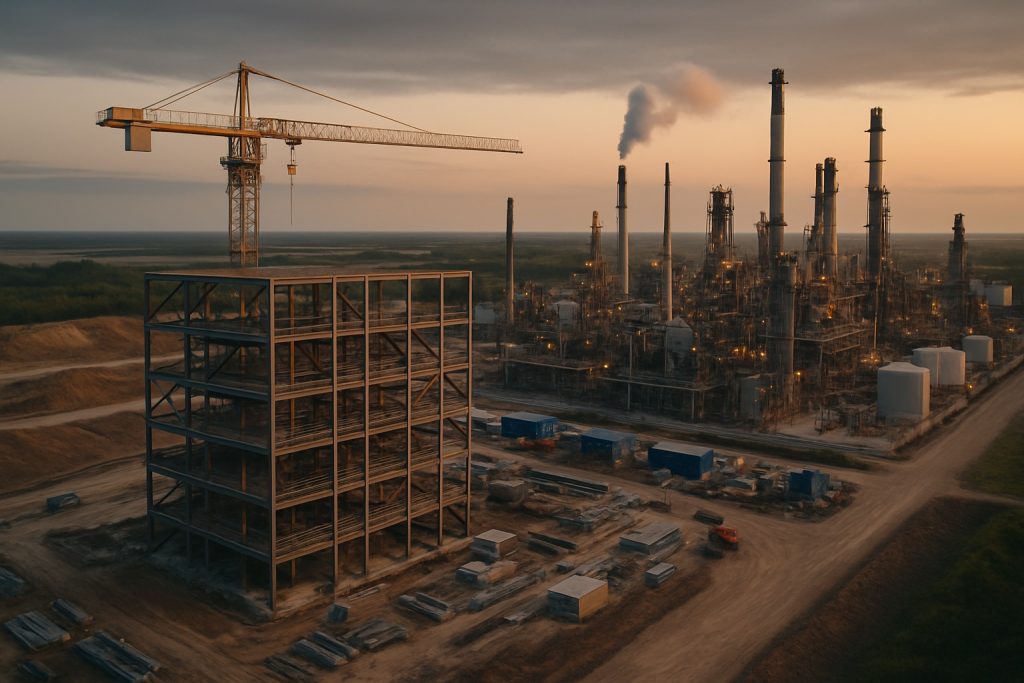
Every major company wants to grow — new refineries, new power plants, new manufacturing lines. But what happens when a billion-dollar expansion gets stuck waiting on one thing: an air permit that takes years to be approved?
That kind of delay doesn't just slow progress — it can quietly become a financial and legal risk. When a project's cost jumps or its timeline changes, public companies may have to report it in their annual report or 10-K filing.
Investors expect transparency, and regulators require it. The danger comes when a delay that started as a technical issue turns into a financial liability — and the company doesn't recognize it in time to disclose it.
Why This Matters to the C-Suite
Most executives never see the permitting backlog until it's too late. These issues usually stay buried in environmental or legal departments, where they sound technical and harmless.
But every CEO, CFO, and general counsel should be asking:
- How many permits are we waiting on?
- How long have they been delayed?
- What's the financial risk if those delays continue?
If those questions don't have clear answers, the company could face scrutiny not only from investors, but also from regulators or the public once the delay becomes known.
Failing to disclose material permitting risks can expose a company to shareholder lawsuits, SEC inquiries, and loss of investor confidence. The delay itself costs money — but the loss of trust can be far more expensive.
California Law Makes It Clear: Delays Are Not Just Operational — They're Reportable
California gives us the clearest example of how serious this can become.
Under the California Corporate Disclosure Act and the California Environmental Quality Act (CEQA), companies must report any issue that could "materially affect financial condition or operations."
That includes long permitting delays.
If a refinery, clean energy project, or manufacturing facility in California is stuck waiting for air permit approval, those delays must be publicly disclosed if they affect costs, schedules, or investment plans.
When a Permit Becomes a Liability
Imagine a billion-dollar expansion waiting on an air permit for years.
The engineers are ready. The financing is approved. The market is waiting.
But the permit doesn't come.
Each month, costs rise. Each year, budgets tighten.
Soon, the company's projections and asset values are out of sync with reality.
If that's not disclosed, the company may be violating securities laws or misleading investors — unintentionally, but still seriously.
Where LSARS Can Help
LSARS, the Life Science Analysis & Reporting Solution, was created to prevent this exact kind of problem.
It's a Human AI permitting intelligence platform that gives executives and general counsels a real-time view of every permit their company has — what stage it's in, how long it's been waiting, and how that delay might affect the business.
LSARS connects compliance data, timelines, and financial risk into one clear picture, in plain language any leader can understand.
It can:
- Track how long each permit has been pending and flag those nearing risk levels
- Estimate financial impacts of delays before they become disclosure issues
- Predict agency slowdowns using data from similar projects
- Provide the documentation general counsel needs for SEC and state reporting
For general counsels, LSARS is a compliance safeguard.
For executives, it's an early-warning system that keeps surprises off the balance sheet.
The New Expectation: Transparency and Foresight
In today's regulatory world, "We didn't know" is not an acceptable answer.
Boards, regulators, and shareholders expect leadership to track — and disclose — the real-world risks tied to air permits and environmental reviews.
Companies that use data-driven tools like LSARS to stay ahead of these risks don't just stay compliant — they gain trust.
Related Guides
- Title V permit backlog — Why Title V cycles are slipping in 2026 and what applicants can do about it.
- Data center air permit guide — National guide on data center air permitting, including Virginia HB 507 Tier IV generator mandate effective July 1, 2026.
Related Insights
Human-AI
Five Minutes That Can Redefine Your Company's Future
A clear, structured way for C-suite leaders to take control of AI decisions — and turn minutes of focus into lasting strategic advantage.
Read More
Human-AI
When Everyone Else Is Stuck Waiting: How Smart Executives Can Turn Federal Delays Into Action
Even when a company completes its Title V application and submits it to a state agency, the EPA remains the final checkpoint. Smart executives can turn this into an opportunity.
Read More
Human-AI
When CEOs Lead, America Builds: How Executive Action Can Break the Permit Backlog and Accelerate Growth
Major corporations are investing billions to expand American production. But in practice, it's being slowed by one enormous obstacle: air permits stuck for years inside overworked state agencies.
Read More